If your child struggles to communicate, you know how hard it can be. Maybe they’re not speaking yet. Maybe they have a few words but don’t use them to ask for things. Maybe conversation feels impossible.
Communication challenges are one of the most common concerns for children with autism. Some children are non-verbal. Others have words but don’t use them in practical ways. Many struggle with back-and-forth conversation, reading social cues, or asking for what they need.
ABA therapy helps your child express themselves in ways that work for them—whether that’s through words, gestures, pictures, or devices. The focus is on functional communication: helping your child be understood in everyday situations.
It’s worth noting that ABA doesn’t replace speech therapy. The two work best together, and many families see the strongest progress when their BCBA and speech therapist collaborate on their child’s care.
Let’s talk about how ABA builds communication skills and what that looks like in everyday life.
Why Communication Is Hard for Many Kids with Autism
Speech delays are common in autism, but the challenges go beyond just talking late. Some children develop a few words and then stop using them. Others can label things—like pointing at a dog and saying “dog”—but can’t use those same words to ask for what they want.
That’s the difference between knowing words and using them functionally. Your child might be able to say “juice” when they see it, but when they’re thirsty, they cry or grab your hand instead of asking.
Then there’s the non-verbal side of communication. Eye contact, pointing to share something interesting, waving hello, reading someone’s face to know if they’re happy or upset—these don’t always develop naturally. But they’re huge parts of how we connect with each other.
How ABA Approaches Communication
Here’s a basic idea that drives ABA: every behavior communicates a need. When your child throws a toy, pulls you toward the fridge, or screams in the middle of a store, they’re telling you something. They might not have the words yet, but they’re communicating.
ABA doesn’t just focus on speech. The real goal is functional communication—helping your child be understood. For some kids, that means spoken words. For others, it means learning to use pictures, gestures, or a tablet that talks for them. ABA therapists use Functional Communication Training to replace challenging behaviors with communication that works, and this approach is closely connected to reinforcement-based strategies that help children learn more effective ways to express their needs.
A Board Certified Behavior Analyst (BCBA) starts by figuring out where your child is right now. What can they already communicate? What’s starting to emerge? Where do they get stuck? From there, they design a plan with goals that actually matter for your child’s day-to-day life.
The Techniques ABA Uses to Build Communication
So how does this actually work? ABA therapists use several proven strategies for building communication, depending on what your child needs.
Teaching Kids to Ask for Things (Mand Training)
This is often where therapy starts because it’s so practical. Your child wants something—a toy, a snack, to go outside. The therapist uses that motivation to teach them how to ask for it.
Let’s say your daughter loves watching videos on your phone. The therapist holds the phone and waits. If she reaches for it, they might prompt her to say “phone” or hand over a picture card with a phone on it. As soon as she does, she gets the phone. Do this enough times and she learns: when I communicate, I get what I want.
Practicing Sounds and Words (Echoic Training)
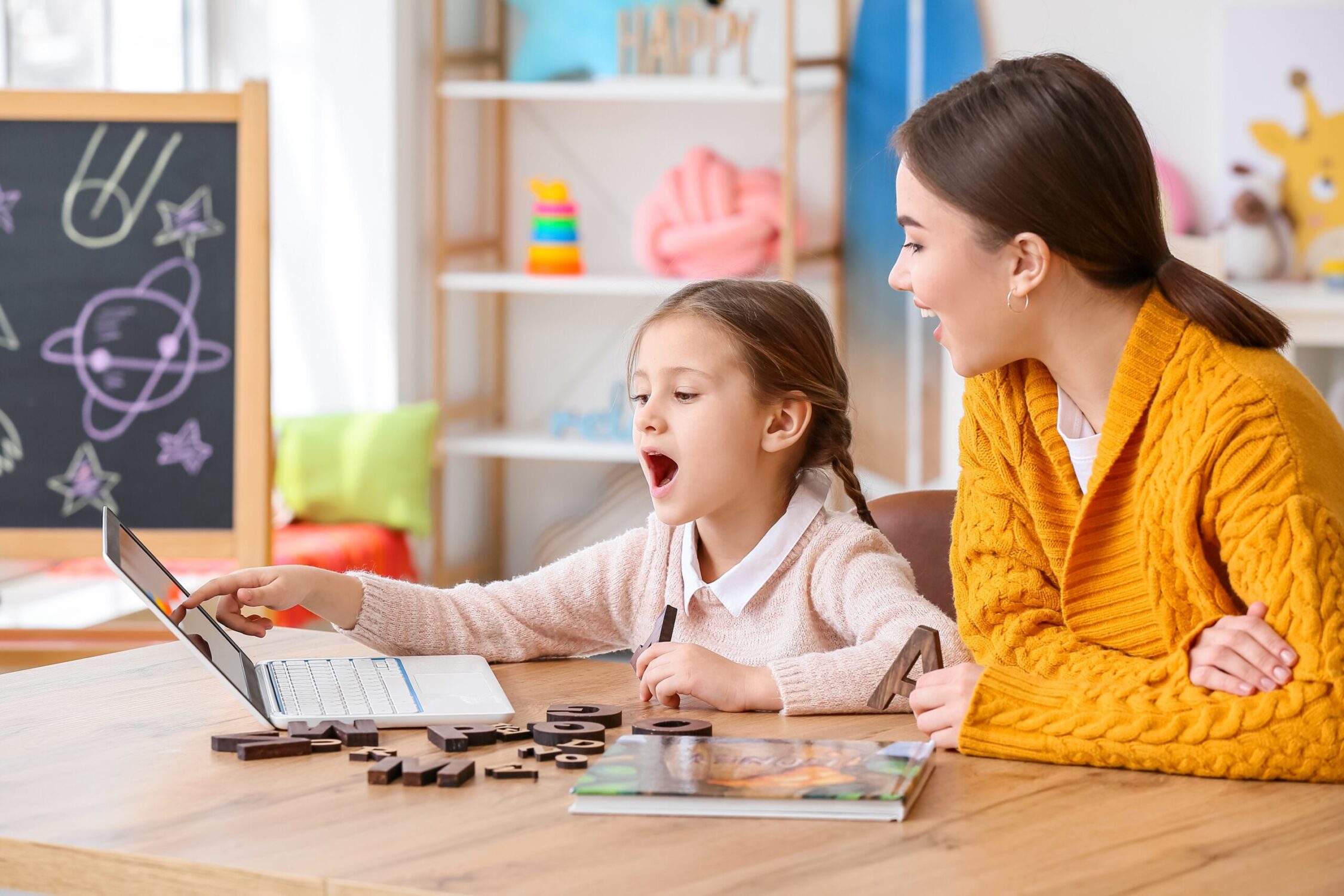
Echoic training focuses on imitation. The therapist says a sound like “ba” and encourages your child to copy it. Then they might try “ma.” Over time, they work up to full words like “ball.”
This kind of gradual progress is part of how ABA teaches skills in small, teachable steps, helping children build new communication abilities over time.
This helps build imitation skills, which are foundational for many types of learning, including communication. For kids who aren’t imitating sounds yet, this is often where therapy begins.
Teaching Back-and-Forth Conversation (Intraverbal Training)
Conversation isn’t just about knowing words. It’s about responding to what someone else says. “What’s your name?” “How old are you?” “What did you do today?”
ABA teaches this step by step. A therapist might start with songs or phrases your child already knows. “Twinkle twinkle little…” and your child fills in “star.” Later, it moves to answering questions and having real exchanges.
Replacing Problem Behaviors with Words (Functional Communication Training)
This one’s big. A lot of challenging behaviors happen because a child doesn’t have another way to communicate.
Your son hits when he’s overwhelmed because he doesn’t know how to say “I need a break.” Your daughter screams when she wants attention because she hasn’t learned to say “play with me.”
FCT figures out what the behavior is trying to communicate, then teaches a better way to say it. Maybe it’s words. Maybe it’s a gesture or a picture card. Once your child has that tool, the hitting or screaming usually decreases because they don’t need it anymore.
Learning in Real Life (Natural Environment Teaching)
Kids don’t learn best sitting at a table doing drills. They learn when they’re playing, eating snacks, or exploring the backyard. That’s what NET is about.
A therapist might work on requesting during a game. Labeling colors during art time. Greeting when someone walks in the door. The learning happens naturally, woven into activities your child already enjoys.
| ABA Technique | What It Teaches | Everyday Example |
|---|---|---|
| Mand Training | Asking for things they want | Child says “phone” to get the phone |
| Echoic Training | Copying sounds/words | Therapist says “ba,” child imitates |
| Intraverbal Training | Back-and-forth conversation | “Twinkle twinkle little…” → “star” |
| Functional Communication Training | Replacing problem behaviors with communication | Instead of hitting → child says “break” |
| Natural Environment Teaching | Learning in natural routines | Practicing requests during play or meals |
When a Child Isn’t Speaking Yet
Not every child will develop spoken language, and that’s okay. There are other ways to communicate that work just as well.
Picture Systems and Devices
PECS (Picture Exchange Communication System) teaches kids to hand you a picture of what they want. At first, it’s one picture—maybe “snack.” Over time, they learn to build sentences using multiple pictures.
Speech-generating devices are another option. These are tablets or dedicated devices where your child taps an icon and the device speaks for them. “I want juice.” “I need help.” “Can we go outside?”
One common worry parents have is will using pictures or a device stop my child from learning to talk? Research actually shows the opposite. Many kids who start with pictures or devices go on to use spoken words too. And even if they don’t, they have a reliable way to communicate.
What This Looks Like in Your Daily Life
Communication goals aren’t just for therapy sessions. They show up everywhere.
At home, your child might be working on asking for toys during playtime or saying “all done” when they finish eating. At meals, they might practice requesting food or answering “What do you want to drink?” At school, the goal might be raising their hand, asking a peer to play, or answering the teacher’s questions.
The more your child practices in real situations, the more the skills become automatic.
What Parents Do to Help
You spend more time with your child than any therapist does. That’s why your role matters so much.
The therapy team will teach you the same techniques they’re using. If they’re working on having your child say “help” when they need assistance, you’ll learn to encourage that same word at home. If your child is learning to use a communication device, you’ll know how to encourage it during everyday moments.
You’ll also learn to notice when your child is trying to communicate—even if it’s messy or incomplete—and respond in ways that help the skill grow. You’ll have tools that make daily life smoother for both of you.
ABA and Speech Therapy: Working Together
ABA therapy doesn’t replace speech therapy; the two are designed to work together. Speech therapists focus on how children form sounds and build language. ABA therapists teach children how to use communication in everyday moments: asking for help, answering questions, or expressing what they need.
The best progress often happens when your child’s BCBA and speech therapist collaborate. They can share goals and make sure what your child learns in one setting carries over to the other. For example, if your speech therapist is working on certain words, your BCBA can create chances for your child to practice using those words throughout the day.
At United Care ABA, we coordinate with the other professionals on your child’s team. We work closely with speech therapists to keep everyone aligned. This way, your child gets complete support, and you don’t have to manage communication between providers yourself.
Getting Started with ABA Therapy
If you think ABA therapy could be beneficial for your child, the first step is scheduling a consultation. You’ll talk about your child’s needs, ask questions, and learn what ABA therapy might look like for your family.
From there, United Care ABA will assess your child’s skills, verify insurance, and create a personalized plan. From there, we’ll get started with therapy sessions, and you’ll have support every step of the way.
Frequently Asked Questions About ABA and Communication
How does ABA therapy address communication skills?
ABA teaches functional communication—ways for your child to express needs and wants that actually get understood. This includes spoken words, gestures, picture systems, and devices. Therapists use techniques like mand training (requesting), echoic training (copying sounds), and functional communication training to teach skills step by step.
What are examples of communication skills for autism?
Communication skills include asking for items, naming objects, answering questions, greeting people, expressing feelings, following directions, and having conversations. Non-verbal skills like eye contact, gestures, and understanding facial expressions are also important.
What is an example of functional communication skills in ABA?
Functional communication is any way a child expresses a need that gets understood. Examples: saying “help” when stuck, handing over a picture card to request a snack, using a device to say “I need a break,” or pointing to show what they want. The communication serves a real purpose in the child’s life.
How does ABA help with speech?
ABA teaches children to use communication functionally in everyday situations. Therapists use techniques like mand training (requesting) and echoic training (imitation) to build skills step by step. For non-verbal children, ABA introduces alternative communication methods like picture systems and devices. ABA works best alongside speech therapy, with BCBAs and speech therapists collaborating to support your child’s overall communication development.