
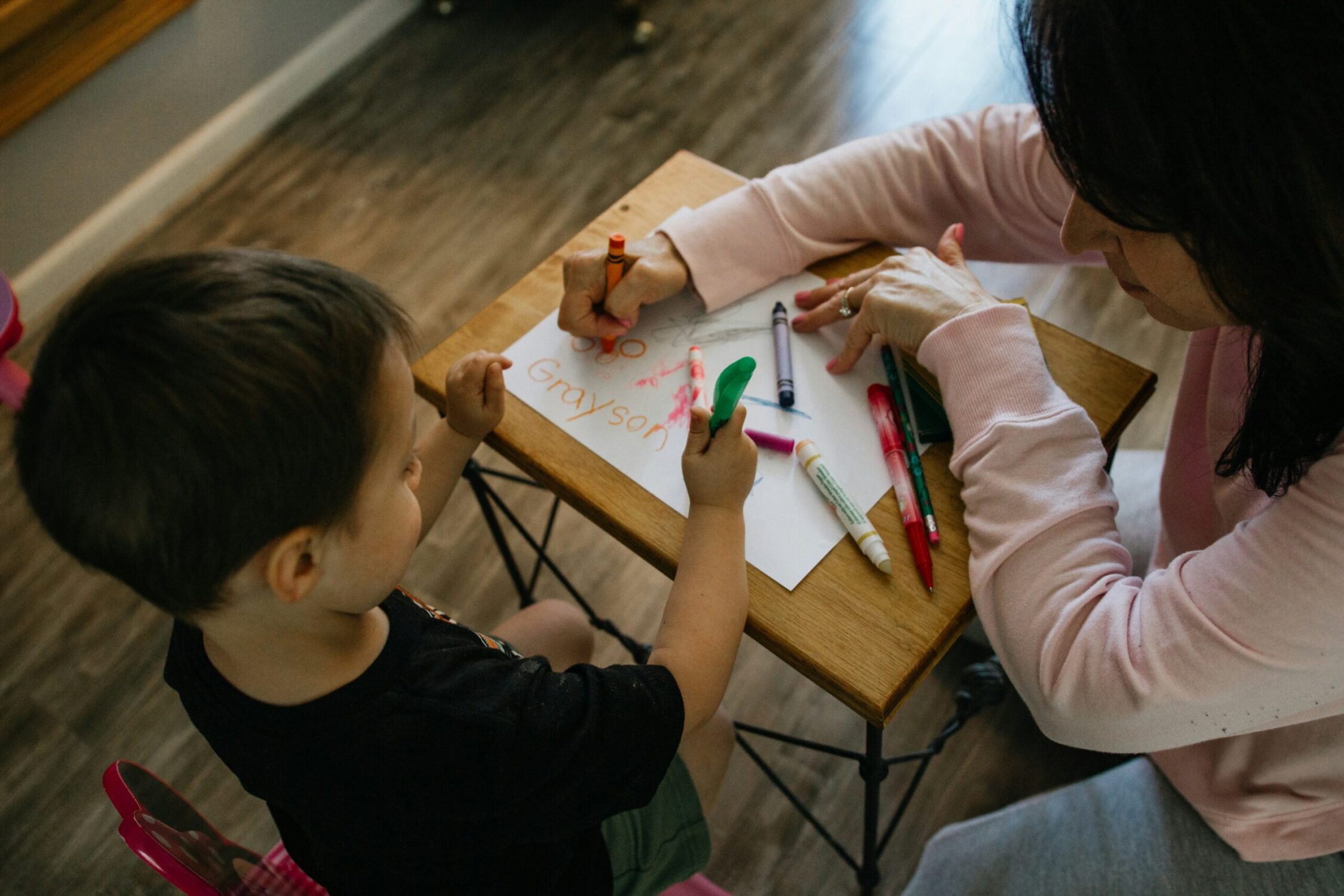
Self-management in ABA therapy teaches a child to notice, track, and reward their own behavior instead of relying only on a therapist or teacher. A child might learn to follow a checklist, track whether they completed a task, or recognize when they’ve reached a goal. Through goal setting, self-monitoring, self-evaluation, and self-reinforcement, kids learn to notice what they are doing well and adjust on their own — building independence that carries into school, home, and community life.
As a parent, you probably know how exhausting it can feel to give the same reminders over and over. You want to acknowledge your child’s challenges, but you also want to create space for them to grow. Self-management skills help shift some responsibility to your child over time, giving them practical tools to move through everyday routines with greater independence.
What Does “Self-Management” Actually Mean?
Like many ABA interventions for autism, self-management focuses on improving socially significant behaviors. A self-management plan gives children specific strategies for noticing and managing their own behavior with less adult support — it isn’t simply another term for self-control.
The difference between self-management and self-monitoring
While they sound similar, self-management and self-monitoring are not the same thing in ABA. Self-monitoring is one specific tool within self-management — it involves noticing and keeping track of a specific behavior.
For example, a child using self-management to become more independent with their morning routine may use a checklist for self-monitoring. Each time they get dressed, brush their teeth, or pack their backpack, they check off that step.
Why BCBAs build this into a treatment plan
ABA treatment plans focus on skills children can use in everyday life. Self-management helps children rely less on adult prompting and take more ownership of their routines, behavior, and goals as their independence grows.
The Core Components of a Self-Management Plan
Self-management ABA plans are tailored to your child’s needs, and they typically contain all or some of the following self-management interventions. Together, these components help your child complete tasks with greater independence.
Goal setting, self-monitoring, and self-evaluation
First, your child works toward a clear goal, such as completing their morning routine. They may use a checklist, tally, or other tool to track the behavior, then look back at their progress to see whether they met their goal.
Self-reinforcement and self-instruction
Children learn to use self-talk and visual cues to guide what they do next — for example, a child might verbalize, “first shoes, then backpack.” They also learn to reward themselves after reaching a goal.
How Self-Management Skills Are Taught, Step by Step
Teaching self-management techniques in ABA is a gradual process. Children are first taught the skills with adult support, then given more responsibility as they learn to manage their own behavior independently.
Choosing a target behavior and a simple tracking tool
First, a specific behavior is chosen that the child can recognize and track. Instead of a broad goal like “do better at school,” the target might be “raise my hand before speaking” or “turn in my homework on time.”
Next, a tracking tool or self-management method is chosen to match the child’s abilities and the behavior. Depending on the child and goal, they might use a timer to check whether they’re still on task, a visual checklist for a routine, a token board, or an app or journal to track progress. The BCBA may first model how to use the tool and practice with the child before gradually reducing support.
Fading adult support as independence builds
As independence grows, prompts and check-ins are gradually reduced. Over time, a child may self-monitor for longer periods and learn to recognize when they’ve met a goal with less adult support.
Where Self-Management Shows Up in Everyday Life
Self-management is an important life skill that children with autism can use across different stages of life. Whether it’s keeping up with personal hygiene or bringing the right supplies to class, self-management can make it easier to manage responsibilities in a range of settings.
At home and in the community
Outside of school and therapy, a child can apply self-management in many ways — for example, by checking off steps in a morning or bedtime routine, using a timer during homework, or keeping track of what they need before leaving for an activity. Parents may also learn how to support the same self-management strategies between sessions.
At school
Self-management strategies can also be practiced during the school day, whether they’re guided through in-school ABA therapy support or reinforced by a teacher in coordination with the child’s therapist. A child might track whether they raise their hand, check off completed assignments, or recognize when they need to use a break or coping strategy.
Helping Your Child Build Lasting Independence
Imagine having to give fewer reminders to get dressed, finish homework, or pack a backpack — and seeing your child take that first step on their own more often.
Self-management helps make that independence possible. As children learn to recognize their own behavior, make adjustments, and work toward their goals, they build skills they can carry from preschool to high school — and eventually into work, relationships, and adult life.
And while parents play an important role in fostering self-management, you shouldn’t have to figure it all out on your own. See how our approach to ABA therapy supports children and their families, or find a United Care ABA near you.
FAQs
What is self-management in ABA therapy?
Self-management is a set of strategies that teach a child to track and reinforce their own behavior instead of depending entirely on a therapist or teacher. It typically includes goal setting, self-monitoring, self-evaluation, and self-reinforcement.
How is self-management different from self-monitoring?
Self-monitoring is one piece of self-management, the act of tracking or recording a behavior. Self-management is the broader plan, which also includes setting the goal, evaluating progress, and rewarding success.
At what age can a child start working on self-management skills?
There’s no single age requirement. A BCBA can adapt self-management strategies to a child’s individual skills, needs, and level of support.
Does self-management work for kids with more significant support needs?
Yes, self-management strategies can be adapted for children with significant support needs. A child who needs more support might use a picture-based tracking chart with hands-on prompting, while a more independent learner might use a simple checklist or app with minimal supervision.
How can parents support self-management goals at home?
Consistency makes a big difference. Using the same tracking tool and reward system at home that your child uses in therapy sessions helps the skill transfer and stick across settings.
3 References
-
Association for Science in Autism Treatment. (n.d.). Self-management interventions. https://asatonline.org/for-parents/learn-more-about-specific-treatments/applied-behavior-analysis-aba/aba-techniques/self-management/
-
Indiana Resource Center for Autism. (n.d.). Don't forget about self-management. Indiana Resource Center for Autism, Indiana University Bloomington. https://iidc.indiana.edu/irca/articles/dont-forget-about-self-management.html
-
Newman, B., & Ten Eyck, P. (2005). Self-management of initiations by students diagnosed with autism. The Analysis of Verbal Behavior, 21, 117-122. https://doi.org/10.1007/BF03393013