
Angela was turning two. All of her friends were already registered in preschools for the coming September, and spaces were running out.
But her mother, Joyce, was nervous. Angela had gotten an ASD diagnosis a few months ago, and had been going to ABA therapy since. Joyce wasn’t sure. Should she register Angela in the preschool all her friends were sending their children to, or keep Angela in the ABA clinic?
ABA therapy or preschool — it’s the classic conundrum parents face when their child who has an autism diagnosis reaches preschool age. The ABA therapy vs preschool decision can feel overwhelming, especially when spaces are filling up and you’re not sure which path is right. Both options can make sense and enable a child with autism to blossom, depending on their needs.
In order to make the decision, you need to understand what ABA therapy is and how it compares to preschool.
What happens in ABA Therapy vs Preschool
ABA Therapy is a clinical treatment, often done at home or in a clinic, where therapists work one-on-one with your child. It’s an adult-led environment geared towards teaching children specific skills.
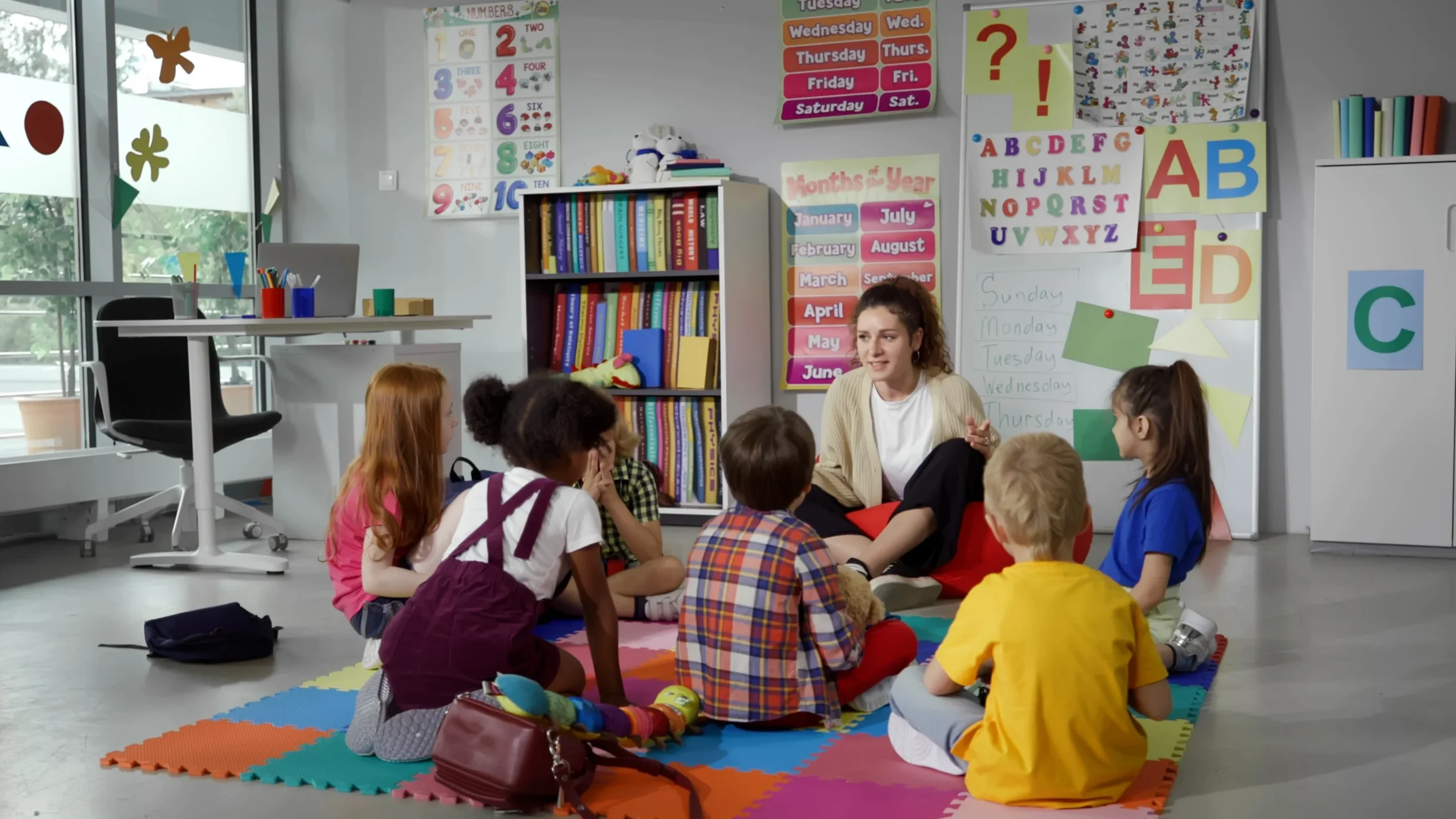
Preschool is the first year of traditional formal education and is similar to a classroom setting. It has a higher adult-to-child ratio, and children play with other kids to pick up early academic and social skills.
Children experience structured activities in an ABA session, while the day allows for more free time and choice in a preschool.
How ABA Therapy Works
ABA Therapy is run by a Board Certified Behaviour Analyst (BCBA) who designs a specific, individualized program for your child, which defines specific skills your child needs to master.
A Registered Behaviour Technician (RBT) applies the program to build those skills in a calm, structured environment. They use meaningful positive reinforcement when a child successfully achieves a skill.
Your child’s progress is carefully observed, and the program is frequently amended according to their growth.
For younger children (ages 2-5), it’s normal to have longer ABA sessions, like the length of a day at preschool. Research shows that intense, early intervention is the most effective form of ABA therapy.
How Traditional Preschool Works
Preschool is led by a teacher, in a classroom style setting.
Your child is part of a large group of children led through a daily schedule that’s a mix of activities like outdoor play, circle time, and literacy or math based games such as counting games or storytime.
Your child will learn broader skills like following routines, imaginative play, and social skills, and often absorb social norms and routines from their environment.
The main differences between ABA Therapy and Preschool
Understanding the differences between ABA therapy and preschool can help you determine what’s best for your child:
Here are some key differences between them:
Individualized Support vs Group Learning
In ABA therapy, every session and action is tailored for your child’s needs. It’s a one-on-one setting, and their progress is closely watched and developed.
For a child who is falling behind their preschool-aged peers, individual attention and action to build important skills will help them catch up.
In preschool, the focus is on a group setting, and teachers follow a curriculum designed for whole groups of children. Children are able to follow along with minimal assistance.
| 💡For example: | In ABA therapy Angela might be taught how to cut out a star shape. That could take a few sessions. The BCBA would break them up into learning to tear the paper, then learning how to hold the scissors, then finally making the cut. | In preschool, the teacher will hand each child a star template and child-friendly scissors. The activity would likely take ~10 minutes. Angela would be expected to cut on her own, with only some assistance from the teacher if she struggles. |
Therapeutic Goals vs Educational Goals
ABA therapy takes place in a clinic. Although there will be some overlap in the skills learnt, as in the above example, the skills taught in ABA therapy are mainly behavioral and developmental skills.
There are different skills that can be learnt in ABA Therapy, and they mainly fall under the banner of basic foundational skills, like following rules and conversations, or tying shoelaces if the focus of the session is fine motor skills.
Preschool focuses on getting your child ready for school, teaching skills like socialization, early academics and classroom readiness.
Your child will learn active listening and will interact with other children, learning teamwork and how to share and take turns.
| 💡For example: | In ABA therapy Angela might be taught to follow rules. The BCBA would model what that looks like, and Angela will learn to meet expectations. | In preschool, the teacher will give rules — and Angela will be expected to understand and follow them. |
Staff Training and Credentials
ABA therapy is led by qualified BCBAs and RBTs. BC stands for Board Certified, R stands for Registered. They have undergone specific training in behavioral science and autism intervention and can tightly supervise your child’s needs.
Preschool teachers are trained in early childhood education and development as well as classroom management. They create a nurturing, engaging environment, but not a clinical one.
When starting with ABA Therapy is the better option
If your child is struggling with foundational, basic skills like communication, daily routines and transitions, a preschool setting could be overwhelming for them and ABA therapy might be the way to go. If you’re considering this path, our guide on starting ABA therapy can help you prepare.
If things like getting dressed or eating are still major challenges for your child, or if they get afraid of other children in the park or aren’t sure how to talk to them, it’s likely that they aren’t ready for preschool yet.
A period of focused ABA therapy for preschoolers can give them the tools they need to thrive in preschool, a little later on.
When starting with Preschool is the better option
If your child is more or less comfortable when interacting with other children and can communicate their basic needs, they’re likely ready for a preschool setting. These skills don’t need to be perfect.
If they can tolerate changes in routine, follow basic instructions, and show interest in other children, they’ll be able to handle developing these skills in a natural way.
Best of both worlds — ABA Therapy and Preschool
ABA Therapy Within Preschool
It was difficult for Angela’s mother to decide. Angela was at a halfway point in foundational skills. She could communicate some things, but not others. She could handle bedtime, but found following other routines difficult.
Joyce realized the ABA therapy vs preschool question had a third answer: both. So she made her decision. Instead of choosing one over the other, she found a way to combine them: she enrolled Angela in preschool with added ABA support built into her day.
A therapist worked alongside Angela in the classroom, helping her follow routines, interact with other children, and practice the skills she was learning in real time. Her BCBA and teacher stayed in close communication, making sure the expectations in the classroom and the goals in therapy were aligned.
This allowed Angela to be part of a social, school-based environment while still getting the individualized support she needed.
Splitting the Day Between Preschool and ABA Therapy
For some families, another option is to split time between settings, with preschool during part of the day and ABA therapy at home or in a clinic.
Although the classic setup is when days are split halfway between ABA and preschool, there’s no right or wrong way to set up a hybrid schedule.
What works best for your family will ultimately depend on your schedules, your availability, and your child’s needs. And you might find that as your child progresses, you’ll want to adapt the lengths of either, so try to keep the schedule flexible.
Communication is Key
In Angela’s situation, coordination between her BCBA, therapist, and teacher was key to her success.
When BCBAs and preschool teachers collaborate, share strategies that work, and ensure that therapy goals are aligned with classroom lessons, it reinforces your child’s learning across both settings.
It also means that behavior challenges are handled in a consistent way throughout the day. When everyone is on the same page, your child knows what to expect, which can make transitions between therapy and preschool feel easier and more predictable.
What to consider in your ABA therapy vs preschool decision
Here are some questions to help you ask yourself and get clear as you make your decision. For additional guidance, explore our parent resources.
- Does my child have foundational communication skills?
(Can they tell me when something is enjoyable or hurts, even in a non-verbal way?)
- Can my child tolerate group settings?
(Do they get overwhelmed to the point they can’t function when there are a lot of people around?)
- What are our primary goals now?
(Do I need my child to be developing early academic and social skills, or would I rather they learn to communicate properly, at their own pace?)
- What does my schedule allow?
(Can I practically transport your child from one setting to the other every day?)
- What has my child’s evaluation team or BCBA recommended?
(Consider asking a professional who knows your child for their perspective on what’s best for your child.)
How United Care ABA can support you
We know that this decision is not an easy one, and we don’t want you to make it alone.
Our clinical team will evaluate your child and assess them honestly for where they are up to.
We’ll help you identify your most important goals, and build a plan that works for your child, you, and your family.
If your decision requires it, we’ll create transition plans and coordinate with preschool providers to make sure your child gets the best care they need.
Reach out if you’re trying to figure out the next step for your child — we’re here to help you.
FAQs about ABA Therapy and Preschool
Is ABA therapy better than preschool for children with autism?
Neither ABA or preschool is better – they serve different purposes and both can work. The answer depends on your child, the stage they’re at, the needs they have, and their goals.
Can ABA therapy replace preschool?
ABA therapy is not designed to replace preschool, but for some children, it might be a necessary starting point. The goal of ABA is to develop skills that will be required in a preschool environment.
How do I know if my child is ready for preschool?
There’s no blanket rule, but generally your child should be able to communicate easily, have a readiness to interact socially, and be able to follow directions. Your child’s BCBA can help you evaluate your child’s readiness.
Can my child attend ABA therapy and preschool at the same time?
Yes. This combination has been successful for many children who were not ready to begin preschool. It works best when there is clear communication between your child’s BCBA and teacher.
Will insurance cover ABA therapy if my child also goes to preschool?
In most cases, yes — ABA therapy is covered regardless of whether your child also attends preschool or not. Coverage plans can vary, so make sure to confirm with your insurance provider. United Care ABA can help you navigate the insurance process.