
What Are Life Skills for Autism?
Life skills for autism are the everyday abilities that help autistic people live, learn, and work as independently as possible. They include self-care, household tasks, managing money, navigating the community, planning, and advocating for their needs. Many are taught step by step, and ABA therapy is one well-researched way to build them.
- Six core categories: self-care, household, money, community/transportation, executive functioning, and communication/self-advocacy.
- They grow with age — from dressing and handwashing to cooking, budgeting, and transportation.
- How ABA teaches them: task analysis, chaining, prompting and fading, visual supports, and reinforcement.
- It’s never too late — adults can keep learning new skills.
- Independence looks different for everyone; the goal is as much control over daily life as possible.
Core Categories of Autism Life Skills
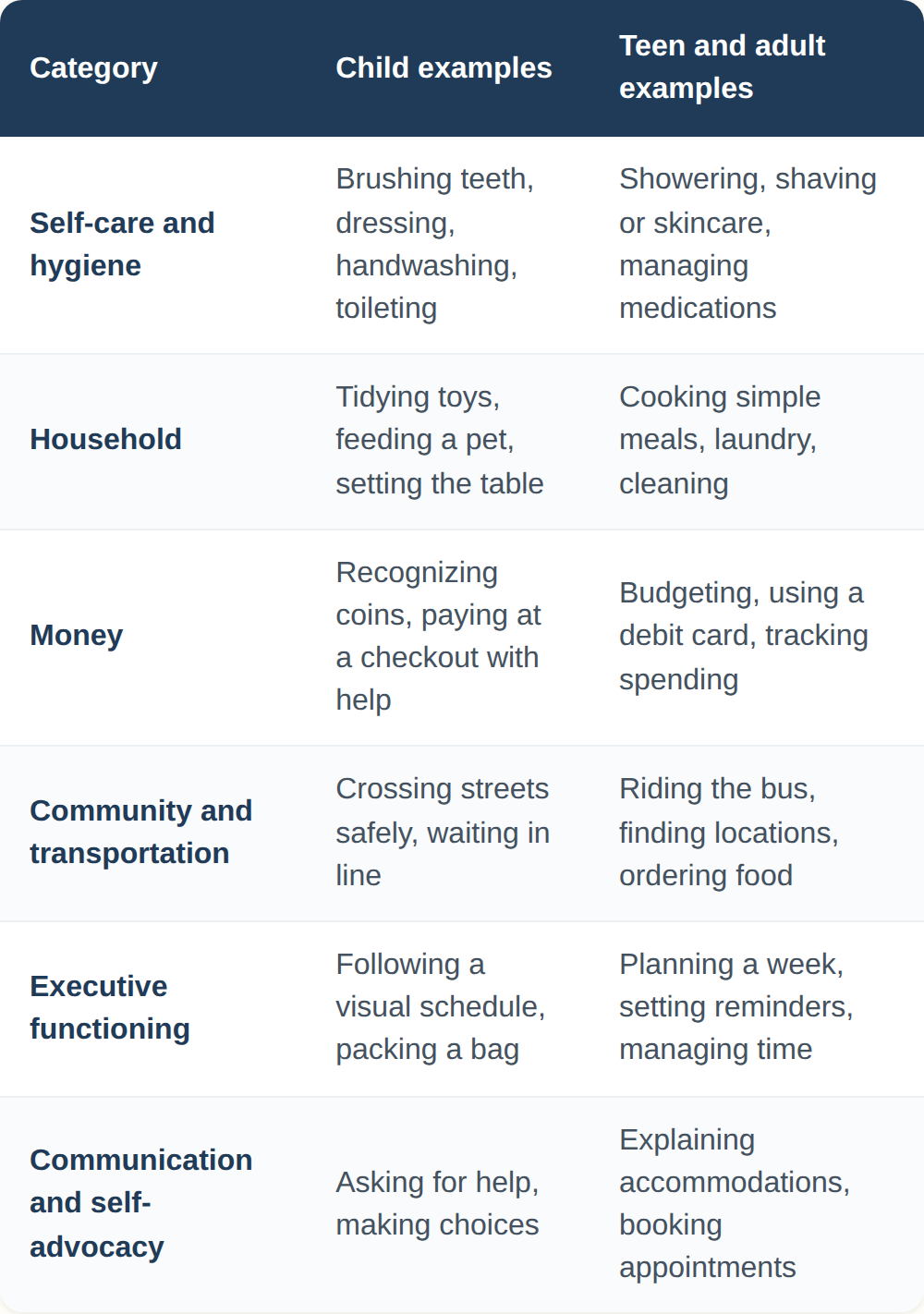
Life skills generally fall into six categories, and each one grows as a child does.
Why Do Life Skills Matter for Autistic People?
Life skills help autistic people build independence, confidence, and a better quality of life. Being able to get dressed, prepare a snack, or ask for help can mean relying less on others and having more opportunities to make their own choices.
As children grow, these abilities matter more and more at school, with friends, at work, and at home. Some life skills also depend on executive functioning abilities, such as planning, organization, and flexible thinking. Research by Pugliese et al. (2016) found a close relationship between executive functioning and adaptive skills in autistic people. This is why life skills programs often work on planning and organization alongside practical tasks.
Which Life Skills to Teach at Each Age
There’s no fixed schedule for learning life skills. Think of the stages below as a progression, not a test. The right starting point depends on each person, and it’s never too late to start.
Young children
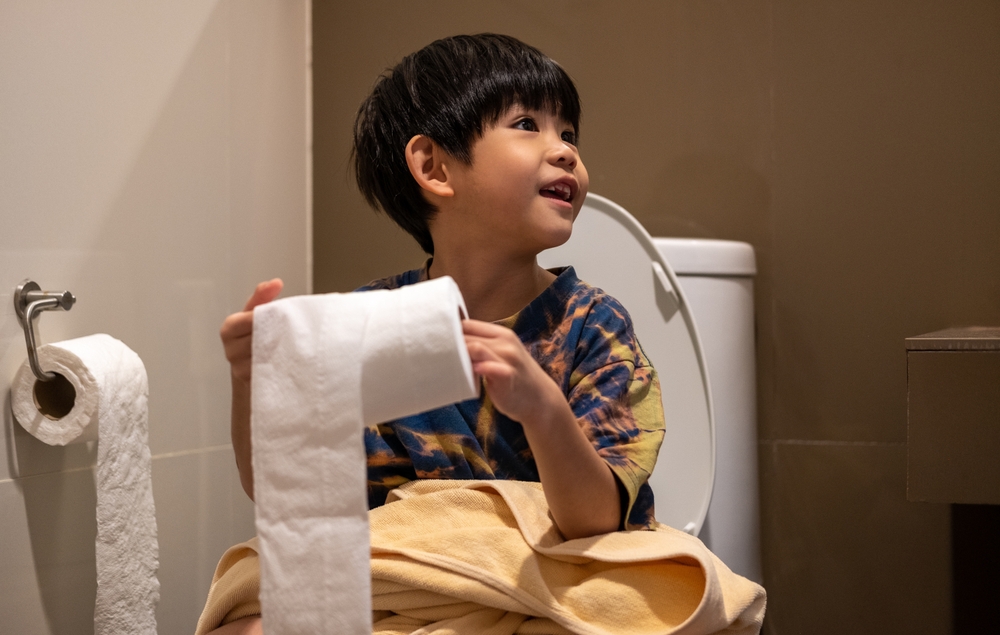
For young children, life skills usually begin with familiar routines: getting dressed, using the toilet, washing hands, putting toys away, and following a morning or bedtime routine. Even simple tasks, like putting on shoes or carrying a plate to the sink, give children practice doing things for themselves. If your child is learning to use the toilet, our guide to ABA therapy potty training explains how to teach the routine step by step.
Tweens and teens
As children get older, they can take on more responsibility, like preparing simple meals, handling money, using public transportation, organizing schoolwork, or explaining what they need.
School can play an important role here. Under the Individuals with Disabilities Education Act (IDEA), a student’s IEP must include transition services by the time they turn 16. Transition planning addresses goals for life after high school, including education, employment, and independent living.
If your teen is struggling with new responsibilities, these behavior strategies for teens with autism can help.
Life skills for autistic adults
Life skills for autistic adults may include managing a household, budgeting, preparing meals, getting ready for work, and handling healthcare responsibilities such as scheduling appointments and keeping track of medications.
Some adults also benefit from supported decision-making, where trusted people help them understand their options while they keep the decisions in their own hands. Adults can keep learning practical skills throughout their lives.
How ABA Teaches Daily Living Skills
ABA daily living skills programs break everyday tasks into smaller steps that can be learned and practiced gradually. A BCBA picks strategies based on each person’s needs and goals. Common ABA life skills teaching approaches include:
- Task analysis: Breaking a skill into smaller steps to show which parts your child already knows and which need practice.
- Chaining: Teaching the steps of a task in a particular order. With forward chaining, your child learns the first step before moving on to the next. With backward chaining, they learn the final step first, so they finish the task successfully from the first lesson. Read more about shaping and chaining in ABA.
- Prompting and fading: Provide help as needed, from gestures to gentle physical guidance, then gradually reduce it using the prompting hierarchy.
- Visual supports: Using picture schedules, checklists, or videos to show your child what to do at each step.
- Natural environment teaching: Practicing skills where they’ll actually be used, like the kitchen or a store.
- Reinforcement: Encouraging progress with praise or rewards your child finds motivating, using positive reinforcement principles.
These approaches aren’t limited to young children. A review by Bennett and Dukes (2014) found that autistic adolescents and adults can also be taught daily living skills successfully.
How to Teach Life Skills at Home, Step by Step
You don’t need special equipment to start teaching life skills at home. Here’s an approach that works for almost any skill, from brushing teeth to making a sandwich:
- Choose a goal together. Start with one skill that fits your child’s daily life, and involve them in choosing it when you can.
- Break it into steps. Write down each part of the task, even the obvious ones. Using task analysis for life skills shows exactly what your child needs to learn.
- Teach one step at a time. Focus on a single step, or use chaining to teach them in order.
- Prompt, then fade. Show your child what to do, then step back as they gain confidence.
- Practice where the skill is used. Brush teeth in the bathroom, sort laundry near the washing machine, and practice paying for items at a real store.
- Celebrate progress. Acknowledge your child’s efforts and successes, even when they’ve only mastered one part of the task.
For example, here’s how you might break brushing teeth into seven steps:
- Pick up the toothbrush and wet it.
- Put toothpaste on the brush.
- Brush the top teeth.
- Brush the bottom teeth.
- Spit out the toothpaste.
- Rinse your mouth with water.
- Rinse the toothbrush and put it away.
A picture of each step, taped beside the sink, lets your child check what comes next without needing a reminder.
Life skills activities for autism
Everyday routines offer plenty of chances to practice. Depending on your child’s age and abilities, you might try:
- Making a simple snack, like a sandwich or a bowl of cereal
- Sorting laundry by color or matching socks
- Setting the table for dinner
- Writing or drawing a grocery list
- Finding items at the grocery store
- Paying at the checkout
- Packing a backpack for the next day
- Riding the bus with support
- Ordering food at a restaurant
- Watering plants or feeding a pet
A simple life skills checklist
Use this checklist to see which skills your child already has and what to work on next.
- Self-care and hygiene: Brushes teeth, gets dressed, washes hands, uses the toilet
- Household: Tidies up, helps with meals, puts laundry away
- Money: Recognizes coins and bills, pays at a checkout
- Community and transportation: Crosses streets safely, waits in line, uses public transit
- Executive functioning: Follows a visual schedule, packs a bag, uses reminders
- Communication and self-advocacy: Asks for help, makes choices, explains what they need
Independence Looks Different for Everyone
Being independent doesn’t necessarily mean doing everything without help. One autistic person might complete a task entirely alone. Another might use a visual checklist. Someone else may need physical help but can explain exactly what kind they want. The goal is as much control over daily life as possible.
It’s also important to respect your child’s preferences and willingness to participate. In ABA, this is often called assent. Watch for signs that your child is uncomfortable or overwhelmed, and be ready to pause or adjust. Working on self-regulation skills can also help children manage the frustration or stress they may experience when learning something new.
How United Care ABA Helps Build Life Skills
At United Care ABA, our BCBAs build life skills goals around each child’s abilities and what matters most to their family. Through in-home ABA therapy, children practice skills like dressing, preparing food, and helping with chores at home. Our community-based ABA and social skills services also give children opportunities to practice outside the home, whether that’s ordering food, shopping, or learning to get around their community.
Through ABA parent training, we teach you the same steps and prompts our therapists use, so practice continues between sessions.
Whether your child is just beginning with self-care or getting ready for the teen years, we’ll focus on practical goals and skills that carry into adulthood. Toilet training is one of them, and our ABA therapy potty training guide walks through it step by step.
FAQs
What are examples of life skills for autism?
Life skills include everyday activities such as brushing teeth, getting dressed, preparing food, doing laundry, handling money, using public transportation, and asking for help. The skills your child works on will depend on their age, abilities, and goals. Younger children might start with setting the table or putting away toys before moving on to more complex tasks.
At what age should life skills training start?
Life skills training can begin in early childhood, with activities suited to your child’s development. Young children might practice dressing or washing their hands, while teens work on cooking, budgeting, and transportation. Federal law requires including transition planning in a student’s IEP by age 16 to help prepare them for adulthood.
How does ABA teach daily living skills?
ABA uses task analysis to break everyday activities into smaller steps, then teaches those steps through practice, prompting, and reinforcement. As your child learns, you gradually reduce the amount of help they receive. Practicing in familiar places, such as the kitchen or bathroom, helps children use these skills in their daily routines.
Can autistic adults still learn new life skills?
Yes. Autistic adults can continue learning practical skills throughout their lives. A research review by Bennett and Dukes (2014) found that daily living skills can be successfully taught to autistic adolescents and adults. With appropriate instruction and practice, adults can develop skills such as cooking, managing money, and scheduling appointments.
What is a task analysis for life skills?
A task analysis breaks an activity into a list of smaller steps that can be taught individually. For example, brushing teeth might involve picking up the toothbrush, applying toothpaste, brushing, rinsing, and putting everything away. Breaking the task down helps identify which steps your child can already complete and where they need assistance.
Who can help teach life skills?
BCBAs, ABA therapists, occupational therapists, teachers, and parents can all help autistic children develop life skills. When the adults involved use consistent instructions and teaching strategies, children have more opportunities to practice what they’re learning at home, at school, and during therapy.
3 References
-
Bennett, K. D., & Dukes, C. (2014). A systematic review of teaching daily living skills to adolescents and adults with autism spectrum disorder. Review Journal of Autism and Developmental Disorders, 1(1), 2-10. https://doi.org/10.1007/s40489-013-0004-3
-
Pugliese, C. E., Anthony, L. G., Strang, J. F., Dudley, K., Wallace, G. L., Naiman, D. Q., & Kenworthy, L. (2016). Longitudinal examination of adaptive behavior in autism spectrum disorders: Influence of executive function. Journal of Autism and Developmental Disorders, 46(2), 467-477. https://doi.org/10.1007/s10803-015-2584-5
-
U.S. Department of Education. (n.d.). Sec. 300.320(b) Transition services (Individuals with Disabilities Education Act). U.S. Department of Education, IDEA. https://sites.ed.gov/idea/regs/b/d/300.320/b